Smaller images
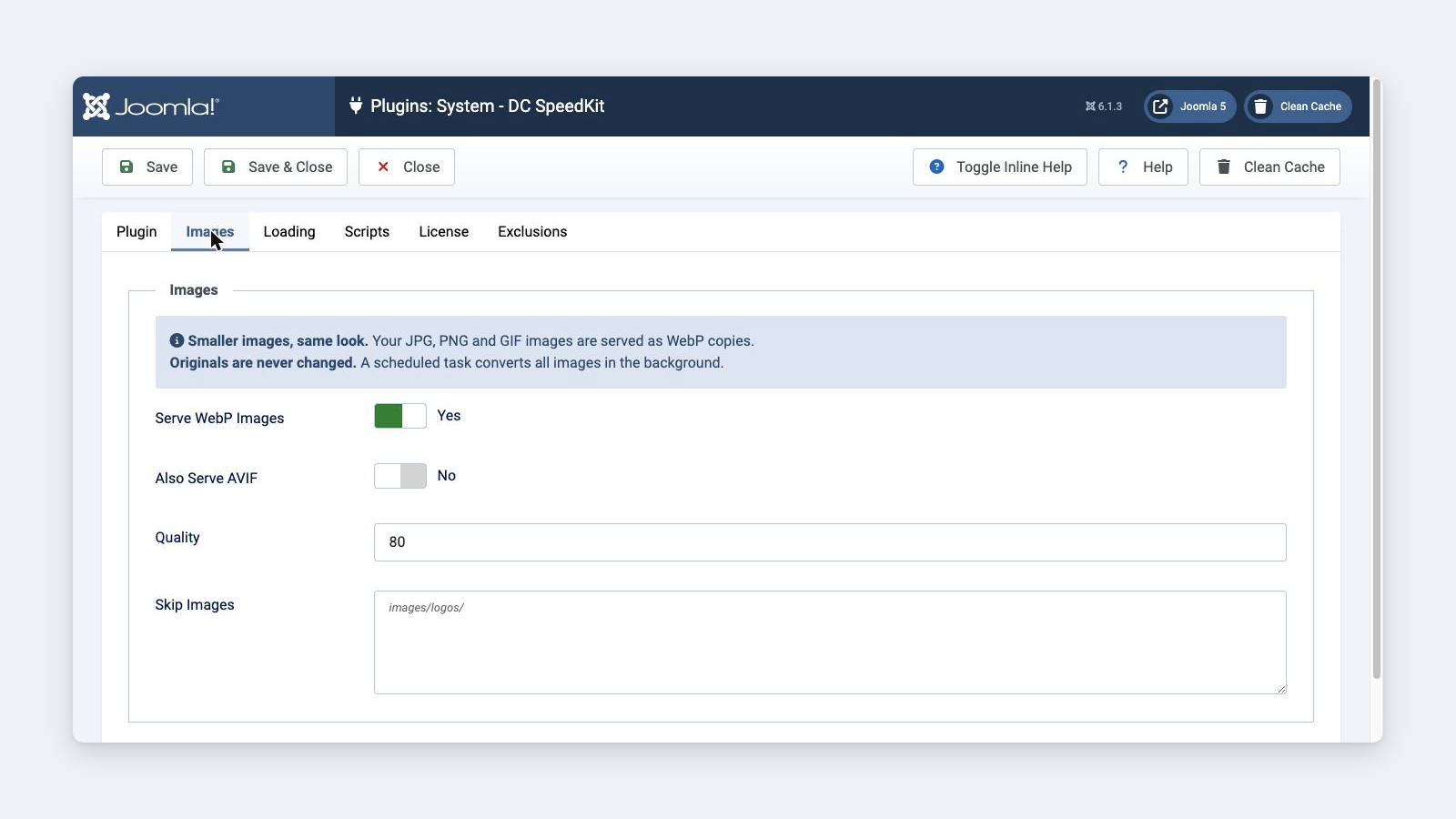
JPG, PNG and GIF images are served as WebP, or as AVIF to browsers that take it. Your original files are never changed.

Faster Joomla pages from lighter images, videos, fonts and tracking scripts.
This site runs DC SpeedKit.
It works on the heavy parts of a page: photos, videos, fonts and tracking scripts.
JPG, PNG and GIF images are served as WebP, or as AVIF to browsers that take it. Your original files are never changed.
Copies at 480, 800, 1200 and 1600 pixels wide, so a phone downloads a photo sized for a phone.
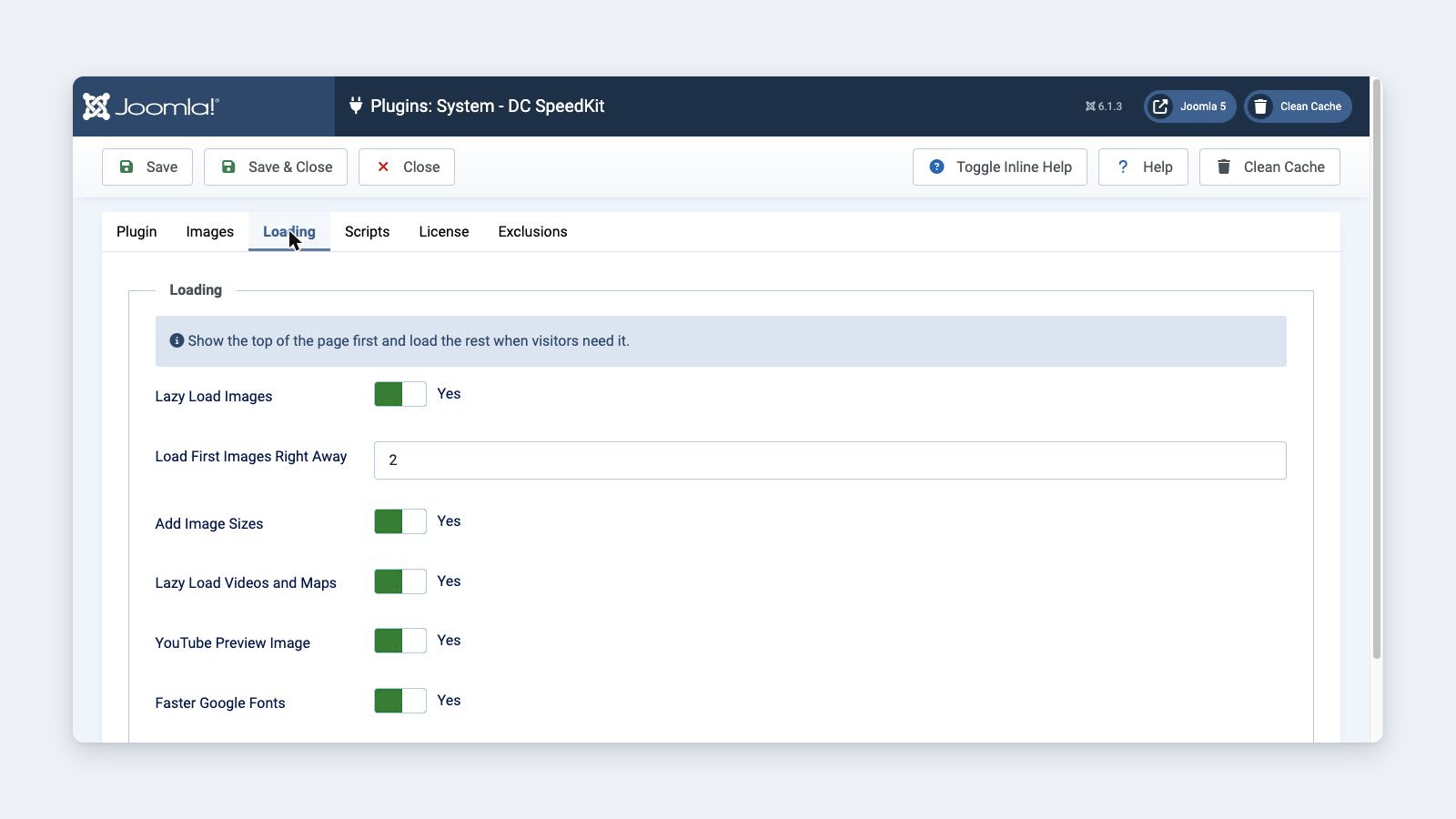
The logo and the first image load at once. The rest arrive as the visitor scrolls near them, and the page keeps its shape while they do.
A YouTube video shows its preview image and loads the player when someone presses play. Maps and other embeds wait until they come into view.
The Google Fonts your pages use are copied to your site once. Visitors stop connecting to Google for them, so their IP address stays off Google's servers.
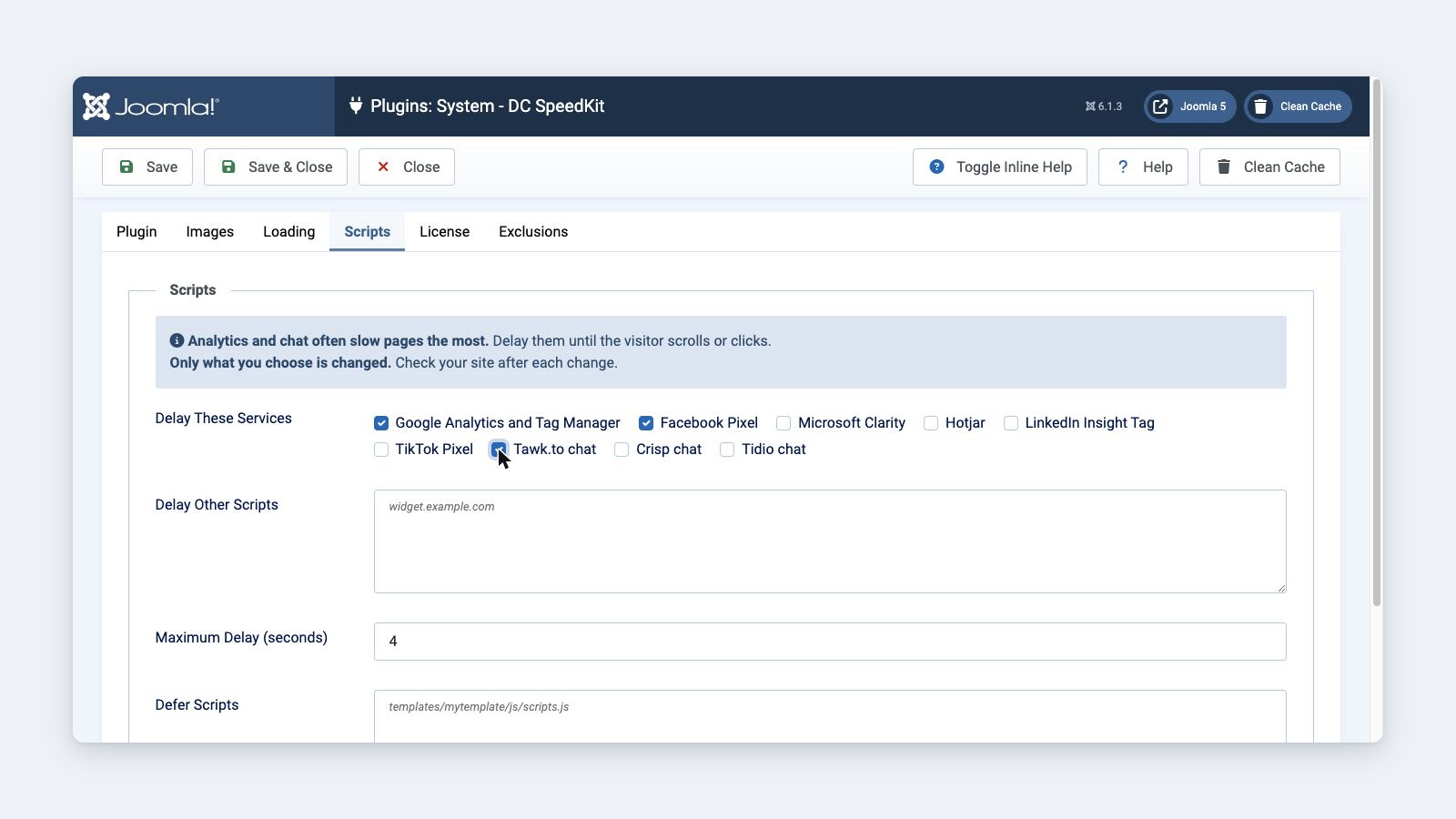
Nine services start at the visitor's first scroll, tap or click, each with its own switch. Add any other script by its address.
The pages that score worst in PageSpeed tend to share the same few problems.
Galleries, portfolios, property listings and shops, where most of the page weight is pictures.
A home page with a YouTube intro, a contact page with a Google map.
Analytics, ad pixels and a chat widget, all loading before the visitor has read a word.
SpeedKit does not combine or minify CSS and JavaScript, so menus, sliders and forms keep running as they were built.
Fonts served from your own domain send no visitor data to Google.
Install, switch on what the site needs, and the scheduled tasks keep it up to date as clients add photos.
You can see every change, and undo any of it.
Image copies sit in their own folder. Switch SpeedKit off and the site is exactly as it was.
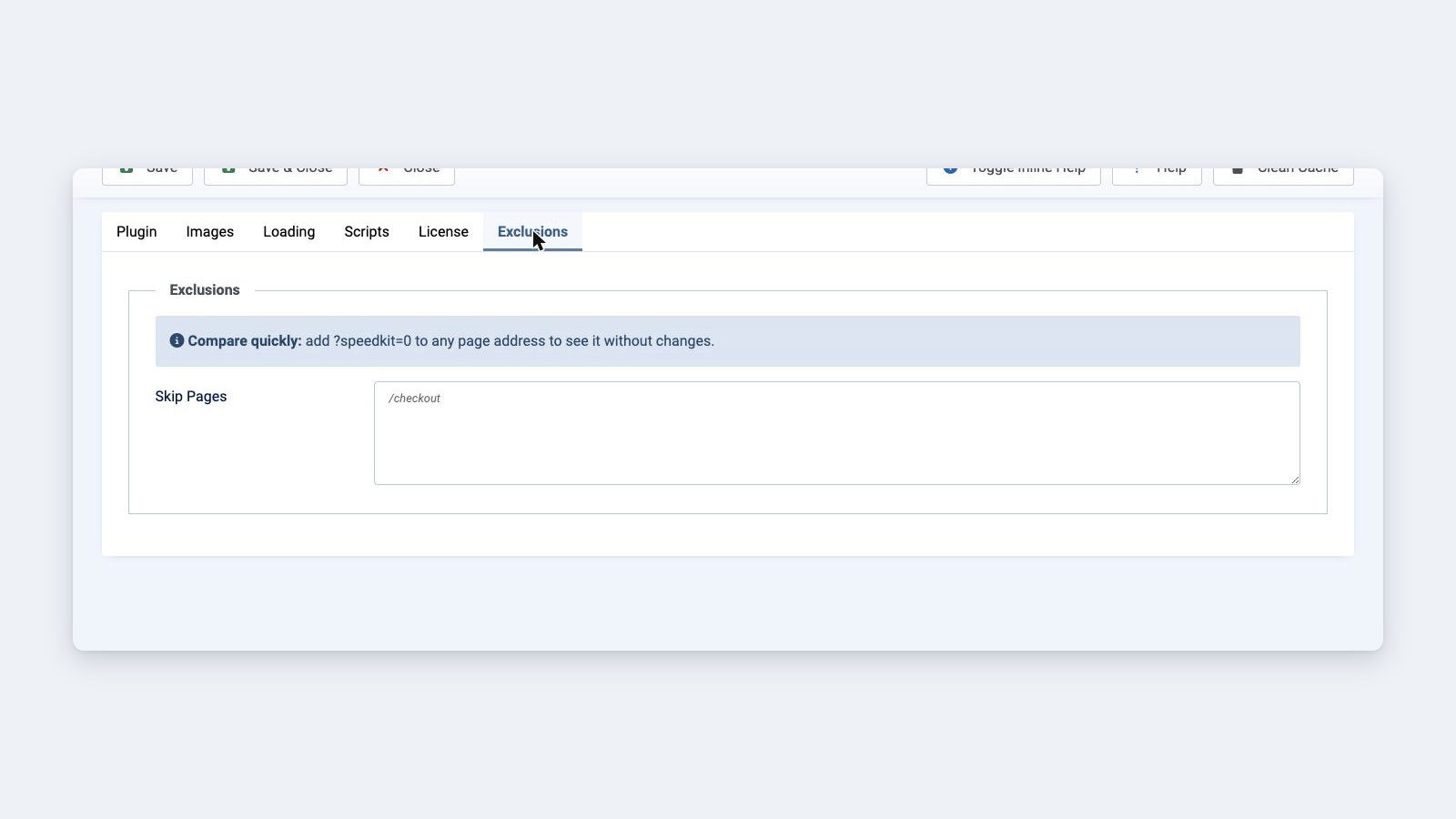
Add ?speedkit=0 to any page address to see it without changes.
Leave out single pages, such as a checkout, or single images, such as logos.
Joomla's Scheduled Tasks make the image copies, so a visitor never waits for a large photo to convert.
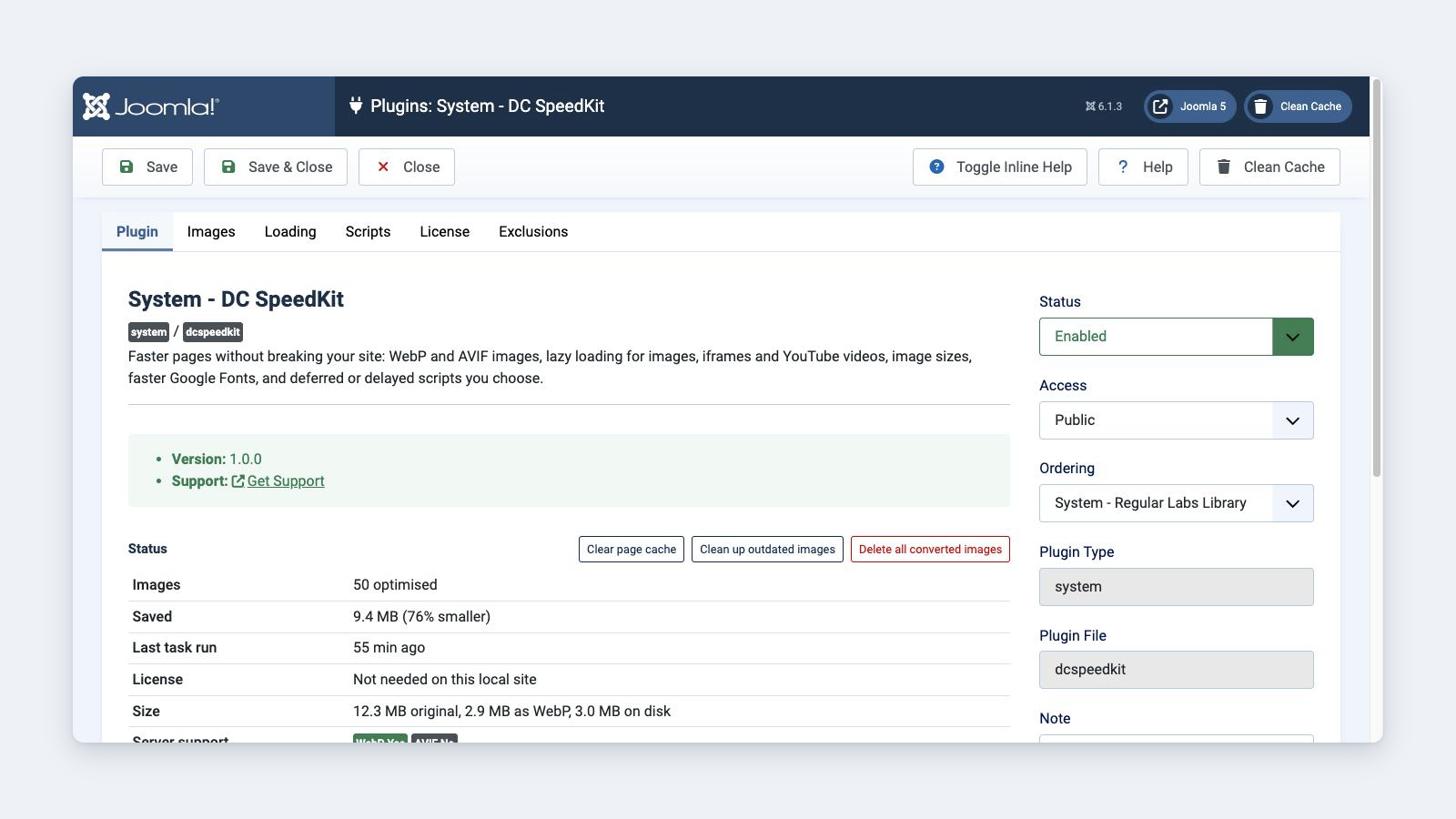
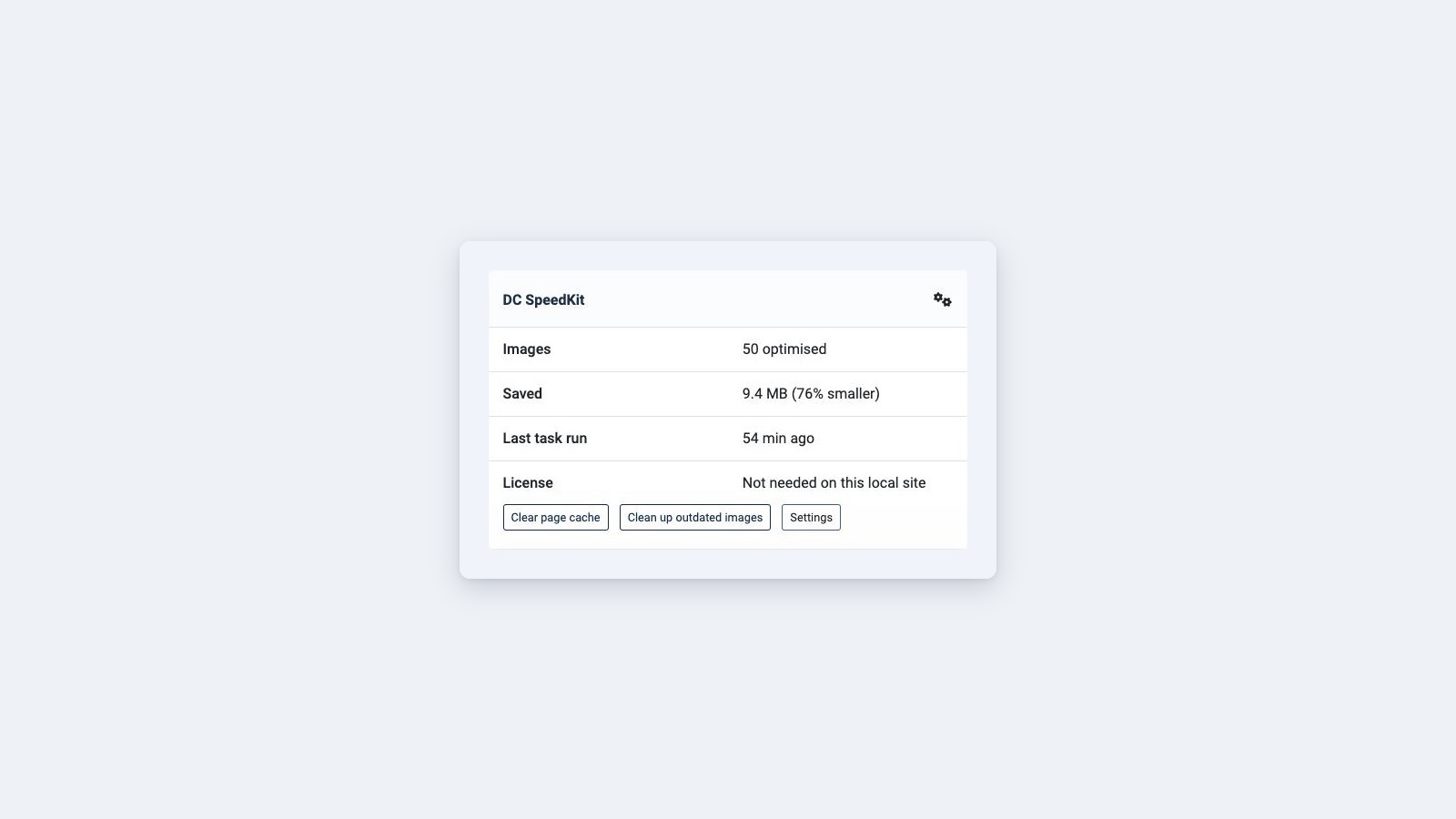
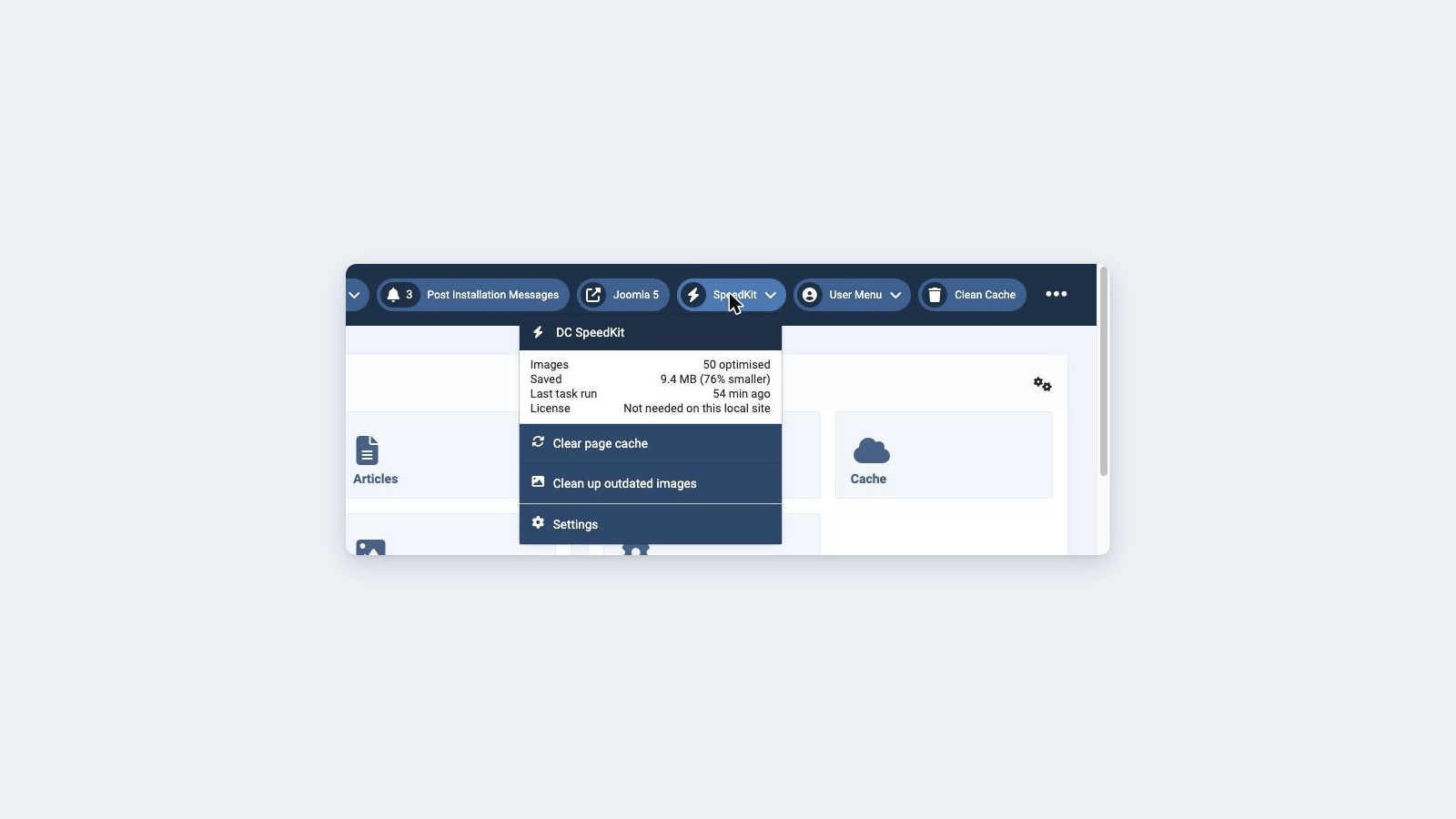
The status panel shows the images done, the space saved and when the task last ran. A SpeedKit menu in the admin top bar clears the cache.
With SSH access, one Joomla CLI command converts every image on the site.
SpeedKit does not combine or minify CSS and JavaScript, the step that most often breaks menus and sliders. Script delays apply only to the services you switch on, and adding ?speedkit=0 to any address shows the page without changes.
Nothing. The WebP and AVIF copies are stored in their own folder. When you replace or delete an image, its old copies are removed by the daily clean-up task.
PHP with WebP support, which most hosts have. AVIF is used where the server can make it. The status panel shows what your server supports.
Visitors who leave before they scroll, tap or click are not counted, usually a few percent. Set a maximum delay of 2, 4, 8 or 15 seconds and they are counted too.
Yes. Saving the settings clears Joomla's cached pages so visitors see the change straight away. If you use Cloudflare or another CDN, purge it there as well.
Usually not. Two tasks are added on install, and Joomla runs them while people visit your site. On a quiet or very busy site, the settings screen shows how to run them with a cron job.
SpeedKit keeps working with every setting in place. Updates arrive in Joomla's own update manager while the licence is active. Renew it to keep receiving them.
Email [email protected] for a personal reply.